
Community
Serving Our Community Since 1962
Clark State College, established in 1962, stands as a dynamic public institution committed to empowering individuals through accessible, high-quality education. With more than 5,000 students each semester, the college offers associate and bachelor’s degree programs, as well as certificates, emphasizing healthcare, business, information technology and manufacturing.
With campus locations in Beavercreek, Bellefontaine, Springfield and Xenia, Clark State provides flexible learning options such as online, evening, and in-person classes. Clark State also partners with communities, businesses and industries to foster innovation and student success. As an institution accredited by the Higher Learning Commission, Clark State College is dedicated to transforming lives and strengthening the regional workforce through education. We’re with you every step of the way!
Vision: Clark State College will lead higher education with a future-focused curriculum partnering with our communities, businesses, and emerging industries while championing innovation and student success within a culture of care that provides intellectual, personal, and professional growth.
Mission: To engage and empower diverse learners by providing high-quality educational programs and services that emphasize student and community success.
Guiding Principles: At Clark State, we believe in the transformative power of education through:
- Learning – Use best practices and resources to create a learning community that challenges, transforms and empowers students and employees.
- Community – Value, trust and support for people with whom we work and serve.
- Partnerships – Collaborate to address stakeholder needs and to contribute to the economic and holistic well-being of society.
- Innovation – Champion an environment that encourages creativity and embraces change.
- Adaptability – Adjust to environmental challenges when they arise.
Student Success Definition: Student success at Clark State College is defined as a holistic effort in which everyone shares in the responsibility of preparing, teaching and supporting students of all backgrounds to realize their academic and career goals.
President
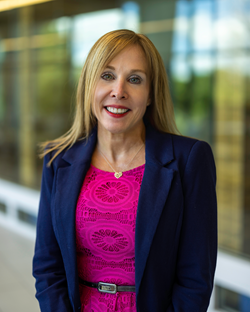
When Jo Alice Blondin, Ph.D., arrived at Clark State College in 2013, she didn’t simply assume the presidency — she set out to transform what a community college could be for its students, workforce and region. As Clark State’s fifth president for more than 13 years — and across a 33-year career in higher education — Blondin has led with a steadfast focus on student success, workforce relevance and community impact.
Under her leadership, Clark State:
- invested more than $40 million in technology and infrastructure
- increased State Share of Instruction funding by 60 percent
- grew the Clark State Foundation from $13 million to more than $30 million
- secured nearly $25 million in new federal and state grants
- expanded academic offerings to meet regional workforce needs, adding four baccalaureate degrees and strengthening programs in advanced engineering, cybersecurity, healthcare, precision agriculture and semiconductor technology
- implemented the nationally-recognized SOAR (Serving Our Own Through Advancement and Retention) mentoring program
- championed inclusive and trauma-informed leadership practices
At the center of Blondin’s presidency is a guiding belief that shaped every decision: when students succeed, communities thrive.
Five-Year Strategic Plan
Clark State’s Strategic Plan is the product of a campus-wide, collaborative effort that serves as a road map to ensure Clark State is focused on student success and serving local communities. The Strategic Plan goals focus on:
Academic Programs
Goal 1: Develop and strengthen quality, innovative academic programs.
- Increase and facilitate faculty’s access to and understanding of data regarding student progress and success in their courses to improve student outcomes.
- Expand professional development opportunities for faculty to meet and exceed pedagogical requirements in flexible learning environments
Student Success
Goal 2: Improve enrollment, student success, retention and completion.
- Implement strategic-focused course scheduling by front-loading courses for students and supporting quick successes.
- Redefine first year experience courses by reworking learning objectives that emphasize academic planning and student intent.
Culture of Care
Goal 3: Facilitate and support an equitable and inclusive culture of care that recognizes, embraces and reflects the diversity of the communities we serve.
- Create a robust, culture-driven employee orientation and professional development to support successful onboarding and longevity of new faculty and staff.
- Develop and expand employee and student mentorship programs and experiences.
Communication
Goal 4: Cultivate effective and efficient communication strategies and collaboration throughout the college.
- Develop and share communication strategies that facilitate information sharing and understanding of college-wide policies, procedures and practices.
- Increase awareness and use of accessible communication techniques to improve access by students, faculty and staff.
Community Collaboration
Goal 5: Promote and support collaboration with diverse communities, businesses and industry partners.
- Develop and implement strong metrics and supports to improve Scholar program enrollment, retention and success and to facilitate the expansion of the program to meet the region’s workforce needs.
- Expand partnerships with regional service providers to promote awareness and improve economic growth opportunity.